
The numbers look right until you check the revenue line.
MQL volume is steady, pipeline coverage holds, and the deals that closed came from referrals and your best reps' networks. This guide explains where that ceiling comes from, why the standard fixes don't move it, and what breaking through actually requires.
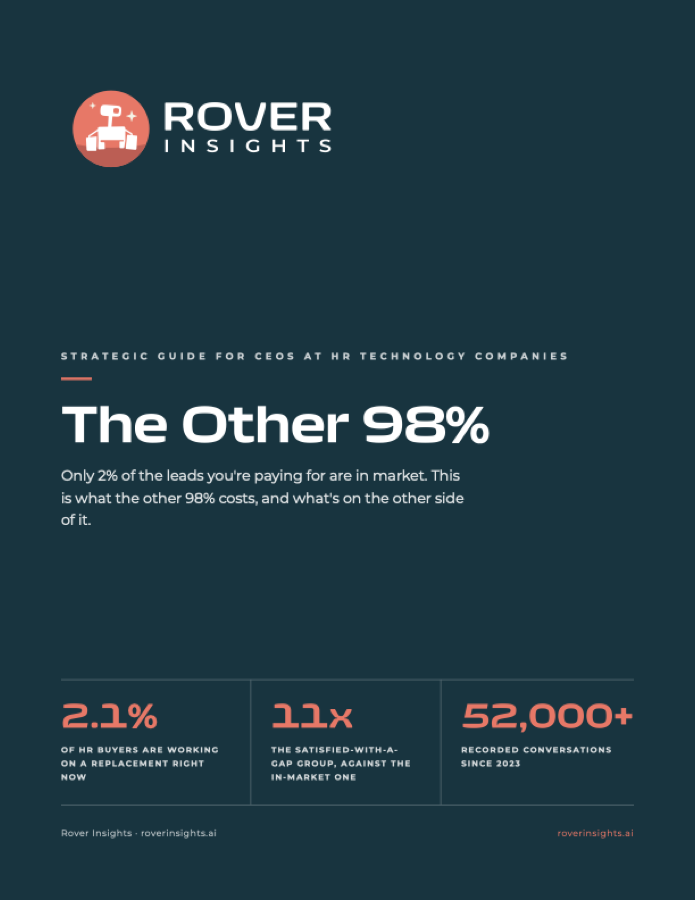
Free download
Get The Demand Gen Ceiling
One field. The guide opens as soon as you hit the button.
You already know this moment.
The board deck holds. The pipeline report shows activity. But the demand gen program has run at more or less the same scale for eighteen months without a step change in output, and the revenue that landed came from somewhere else. For twenty years the growth model ran on a unit defined by whether someone filled out a form. That unit is finished, and every model built on it is on borrowed time.
What's inside
- The math behind the MQL ceiling, and why the HR tech market makes it tighter
- Why third-party intent data has a ceiling of its own
- The failure sequence inside the MQL factory model
- What a structural advantage in demand gen actually looks like
- A three-scenario revenue model to run on your own numbers
- What the vendors who broke through did differently
- The CEO demand gen diagnostic
“Your competitors can buy the same intent data you buy. They can't buy the conversation that happened with your buyer last Tuesday.”
When the unit of demand changes, every model built on the old one is on borrowed time. Get the guide and the diagnostic.